Best Linen Sheets for Hot, Humid Weather: How to Sleep Cool All Night
If you have ever woken up tangled in damp sheets, peeled a fitted sheet off your mattress with a sigh, or flipped your pillow for the hundredth time looking for a cool spot, you already know that bedding makes or breaks a warm-weather night. In hot, humid climates the wrong sheets trap heat and moisture against your skin, leaving you restless and sticky. The right sheets do the opposite: they move air, wick away perspiration, and dry quickly so your bed feels fresh from the moment you lie down until you wake.
For tropical heat and sticky summer nights, French flax linen is, quite simply, one of the best fabrics you can sleep on. At The Katha we make our bedding in Bali, where humidity is a year-round fact of life, so we have tested what works against the most demanding climate there is. This guide explains why linen outperforms other materials in the heat, what to look for when you shop for linen bed sheets and bed linen, and how to care for them so they stay cool and breathable wash after wash.
Why Heat and Humidity Make Sleep So Hard
Your body naturally cools down as you fall asleep. Core temperature drops by a degree or two, and that dip is part of the signal that tells your brain it is time to rest. Anything that interferes with that cooling process, including bedding that holds heat, can keep you awake or pull you out of deep sleep.
Humidity makes the problem worse. When the air is already saturated with moisture, sweat cannot evaporate efficiently from your skin. Instead it lingers, and if your sheets cannot absorb and release that moisture, it pools against your body. The result is the clammy, overheated feeling that defines a bad night in the tropics or a heatwave. Beating the heat is not only about a lower thermostat; it is about choosing fabrics that actively manage air and moisture around you.
What Makes Linen the Best Choice for Hot Sleepers
Linen is woven from the fibers of the flax plant, and its structure is uniquely suited to warm weather. Here is what sets it apart.
Breathability. Linen fibers are hollow and the weave is naturally open, so air flows through the fabric instead of getting trapped. That airflow carries body heat away rather than holding it against you, which is exactly what you want when the room is warm.
Moisture wicking. Linen can absorb a significant amount of moisture, up to around 20 percent of its own weight, before it ever feels damp to the touch. It pulls perspiration off your skin and then releases it back into the air quickly. You stay drier, and the sheets do not get that swampy feeling.
Fast drying. Because linen releases moisture so readily, it dries faster than cotton. In a humid bedroom that means your sheets reset overnight instead of staying damp.
Temperature regulation. Linen is famously thermoregulating. It feels cool against the skin on a hot night, yet it also insulates gently when the early morning air turns cooler. One set of sheets works across the seasons, which is part of why linen is described as year-round bedding.
Stays fresher, longer. Linen has natural properties that make it resistant to bacteria and odor, so it tends to smell fresher between washes than many synthetics. In a warm climate, that is a real, everyday advantage.
Put together, these qualities are why a linen bed simply feels cooler. The fabric is doing the work of moving heat and moisture so your body does not have to fight to stay comfortable.
Linen vs Other Bedding Materials in the Heat
It helps to see how linen compares with the alternatives you are likely weighing.
Linen vs cotton. Cotton is soft and familiar, and a crisp percale cotton can feel lovely. But standard cotton, and especially dense sateen weaves, holds more moisture and dries more slowly than linen. Once cotton is damp it tends to stay damp, which is the last thing you want in humidity. Linen's open weave and faster drying give it the edge for hot, sticky nights. Egyptian long-staple organic cotton in a lighter sateen is a good crisp option if you prefer that hotel-smooth hand feel, but for pure heat management, linen leads.
Linen vs eucalyptus Tencel. Eucalyptus Tencel lyocell is another excellent cooling fabric. It is exceptionally smooth, silky, and superb at wicking moisture, which makes it a favorite for hot sleepers and sensitive skin. The difference is mostly about feel: Tencel is sleek and sateen-smooth, while linen is airy, textured, and relaxed. Both sleep cool. If you love a silky surface, choose eucalyptus; if you love a breezy, lived-in texture that gets softer with every wash, choose linen.
Linen vs synthetics. Polyester and microfiber blends are inexpensive, but they are the worst performers in heat. They trap warmth, do not breathe, and hold odor. For warm-climate sleeping, skip them.
What to Look for When Buying Linen Sheets for Hot Weather
Not all linen is equal. A few things genuinely matter, and a few marketing terms do not.
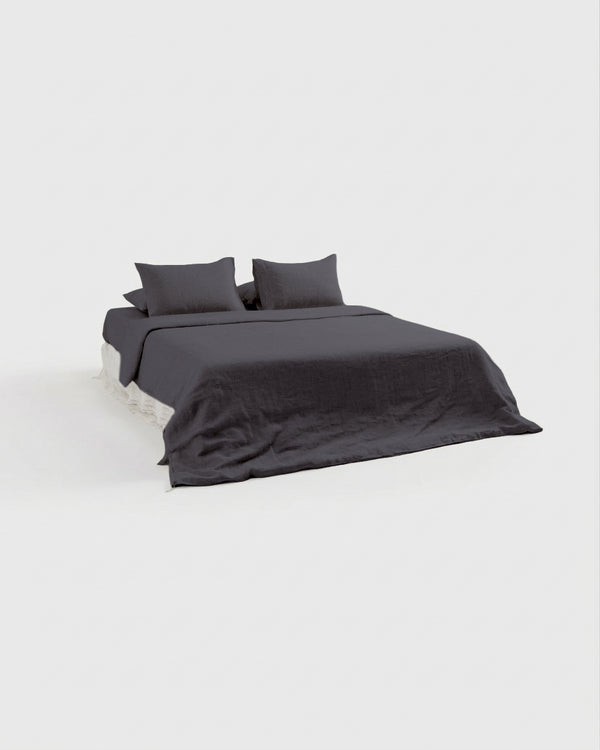
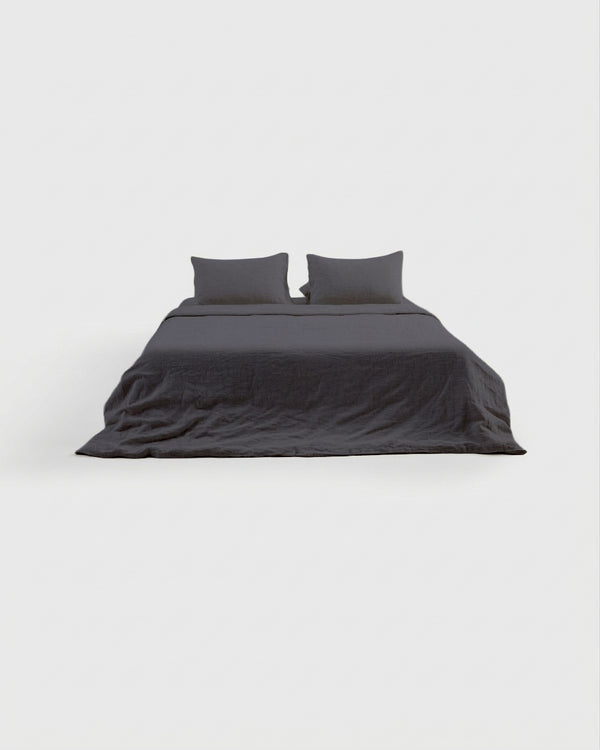
Pure flax linen, not blends. Look for 100 percent flax linen. Blends that mix linen with polyester lose much of the breathability that makes linen worth buying. The Katha linen bedding is 100 percent French flax linen, milled from flax grown in France and sewn in Bali.
A stonewashed or pre-washed finish. New linen can feel stiff. A stonewashed finish breaks the fibers in gently so the sheets are soft and supple from the first night, and they only improve from there.
Fabric weight. Linen is measured in grams per square meter, or GSM, rather than thread count. A mid-weight linen around 180 GSM is the sweet spot for bedding: substantial enough to drape beautifully and last for years, light enough to stay breathable in the heat. Very heavy linen can feel warmer than you want in the tropics.
OEKO-TEX certification. This independent certification means the fabric has been tested for harmful substances. If you are pressing your face into these sheets every night, especially in a hot room where you sweat more, knowing they are free of harmful chemicals matters. The Katha linen carries OEKO-TEX Standard 100 certification.
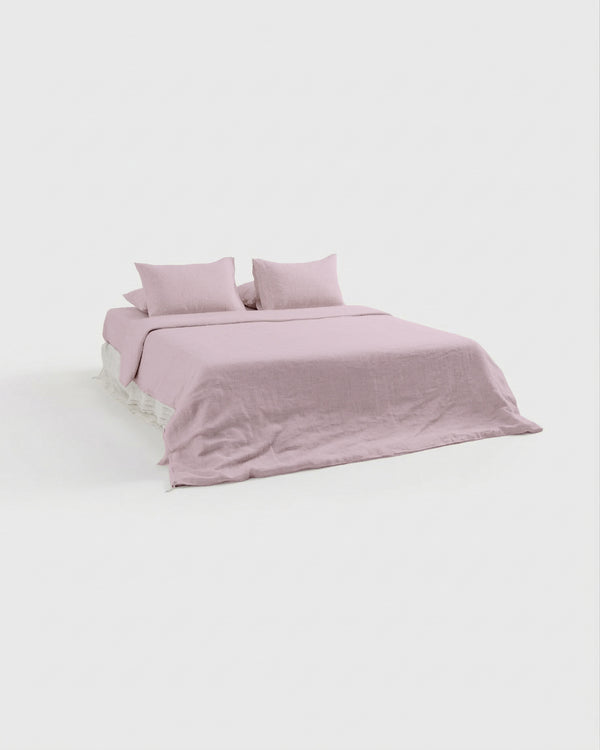
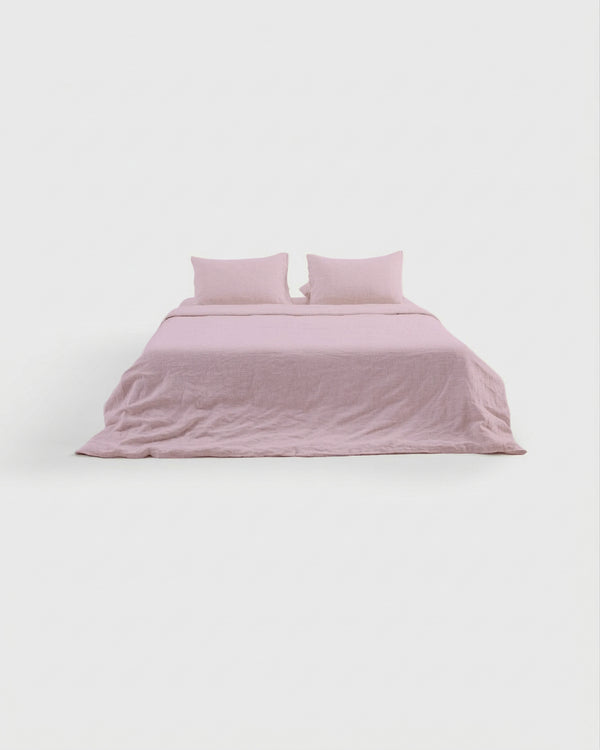
Cooling, breathable colors. Lighter and mid-tone shades can feel a touch cooler in a sun-filled bedroom, though with linen the weave matters far more than the color. Choose the palette you love; the fabric will keep you cool either way.
How to Style a Cool, Breezy Linen Bed
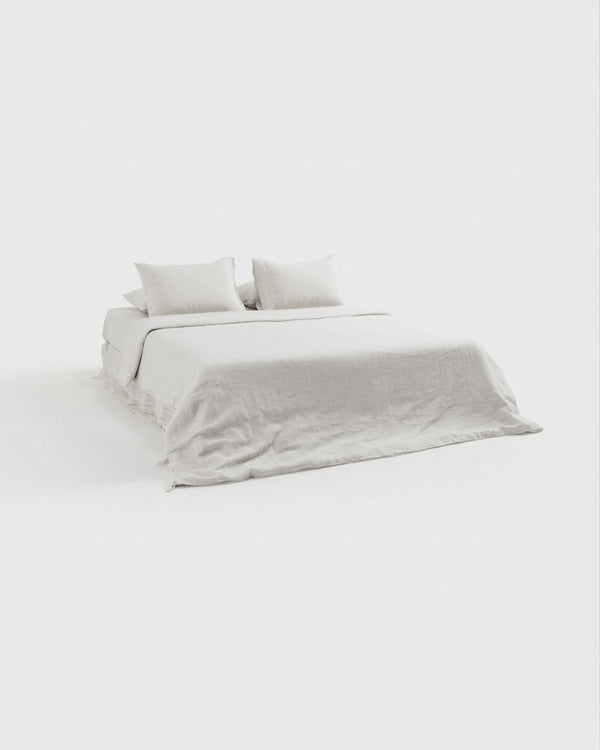
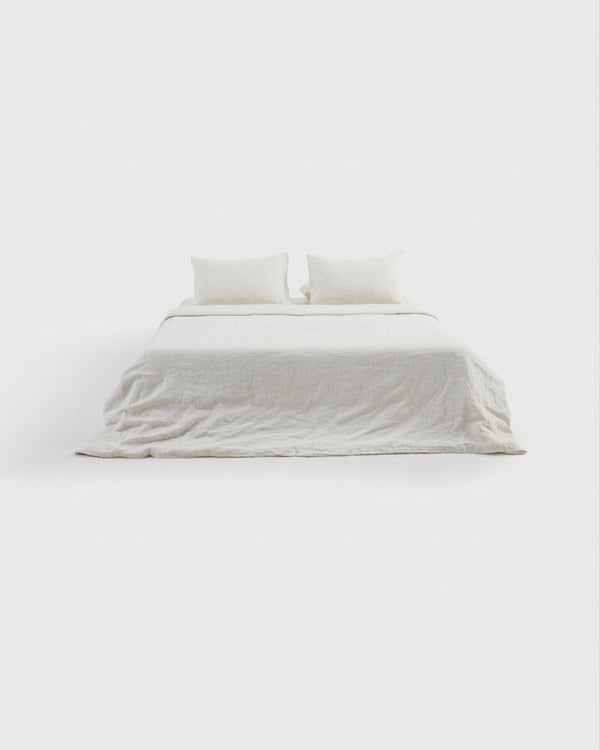
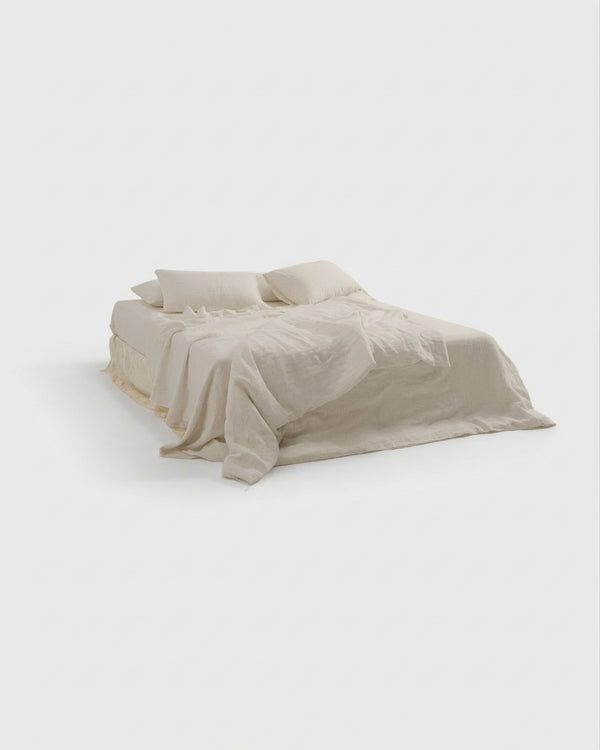
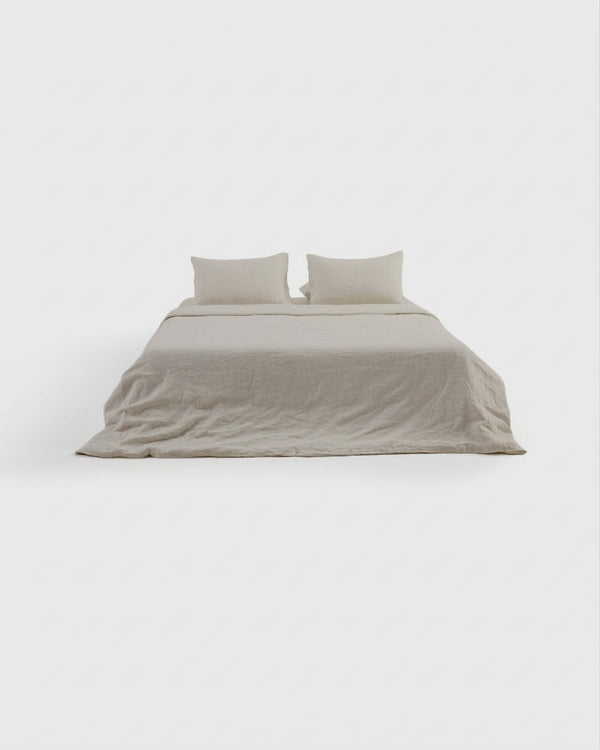
A few simple choices amplify the cooling effect. Skip the heavy quilted coverlet in peak heat and let a flat sheet or a light linen waffle blanket do the layering, so you can add or remove warmth as the night changes. Linen pillowcases (pillow slips) are an easy upgrade on their own: your face and neck are sensitive to heat, and a breathable pillowcase makes a noticeable difference. And because linen has that relaxed, gently rumpled look, you do not need to iron it. A made bed in linen looks effortlessly put together with almost no effort at all.
Caring for Linen So It Stays Cool and Breathable
Good care keeps your sheets performing at their best, and linen is refreshingly low maintenance.
Machine wash cold on a gentle cycle with like colors. Cold water protects the fibers and the color, and it is kinder to the planet. Use a mild detergent and only a small amount; too much soap leaves residue that can dull the fabric and reduce breathability. Skip fabric softener entirely, as it coats the fibers and works against the natural wicking that keeps you cool. Linen softens on its own with every wash, so it never needs help.
Tumble dry on low and remove the sheets while they are still slightly damp, or hang them to finish. Over-drying is the main thing that stresses linen fibers over time. A quick shake and they fall into that signature soft, lived-in drape. There is no need to iron unless you prefer a crisper look. With this simple routine, a good set of linen sheets lasts for many years and genuinely gets better, softer, and cozier the longer you own it.
The Bottom Line
If you sleep hot, live somewhere humid, or simply dread the summer months, your bedding is the easiest and most effective place to make a change. French flax linen breathes, wicks moisture, dries fast, and regulates temperature better than almost anything else you can put on a bed, and it does it while looking relaxed and beautiful. Choose pure, stonewashed, OEKO-TEX certified linen in a mid-weight around 180 GSM, care for it gently, and you will feel the difference on the very first warm night.
At The Katha, cooling bedding is not a seasonal add-on; it is what we make, tested against Bali's heat and humidity so it works wherever you sleep. Explore our French flax linen sheet sets, duvet covers (also called quilt covers or bed covers), and pillowcases, and give yourself the kind of night that the heat usually steals.