Eucalyptus Tencel Bedding: The Complete Guide to Cooling Sheets
If you have ever woken at 3am with the sheets kicked to the end of the bed, you have already done the research that matters. Sleeping hot is not a preference problem. It is a fabric problem.
Eucalyptus Tencel is the fabric most people land on when they go looking for a fix. It has become the default recommendation in cooling-bedding roundups, usually with very little explanation of what it actually is or who it genuinely suits. This guide is the explanation — what the fibre is, how it behaves against skin, how it compares to the linen and organic cotton sitting beside it on our shelves, and how to keep it feeling the way it did on night one.
What eucalyptus Tencel actually is
Tencel is a brand name, not a fibre. The fibre is lyocell: a cellulosic fibre made from wood pulp, in this case from eucalyptus trees. Calling it “eucalyptus bedding” is accurate but slightly romantic — you are not sleeping on leaves. You are sleeping on wood cellulose that has been dissolved and spun into a filament.
What makes lyocell interesting is how that happens. The pulp is dissolved in a non-toxic organic solvent, and in a closed-loop process more than 99% of that solvent is captured and reused rather than discharged. Compare that to conventional viscose rayon, which uses carbon disulfide and has a genuinely poor environmental record, and you can see why lyocell gets talked about differently. Same broad family, very different process.
Eucalyptus itself is a fast-growing hardwood that does not need irrigation or pesticides in the way cotton does. That is a real advantage, though it is worth being honest that “sustainable” is doing a lot of work in most marketing copy. The closed-loop solvent recovery is the part that is actually verifiable.
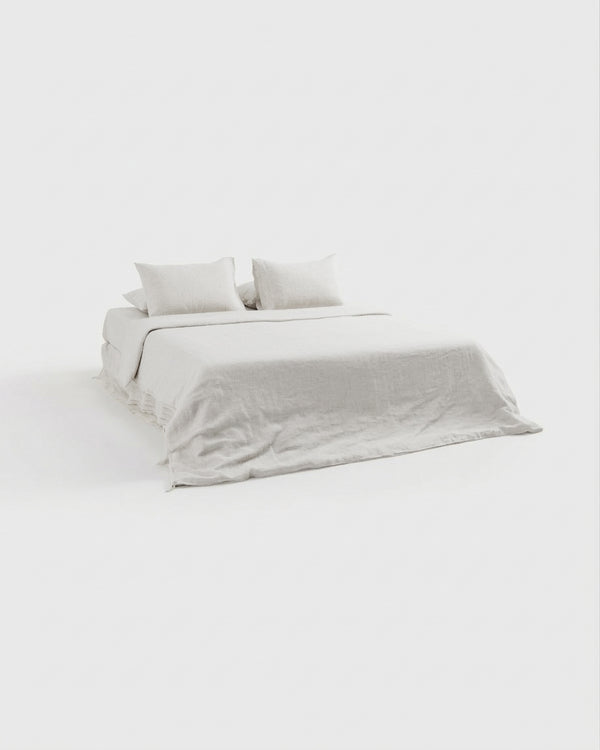
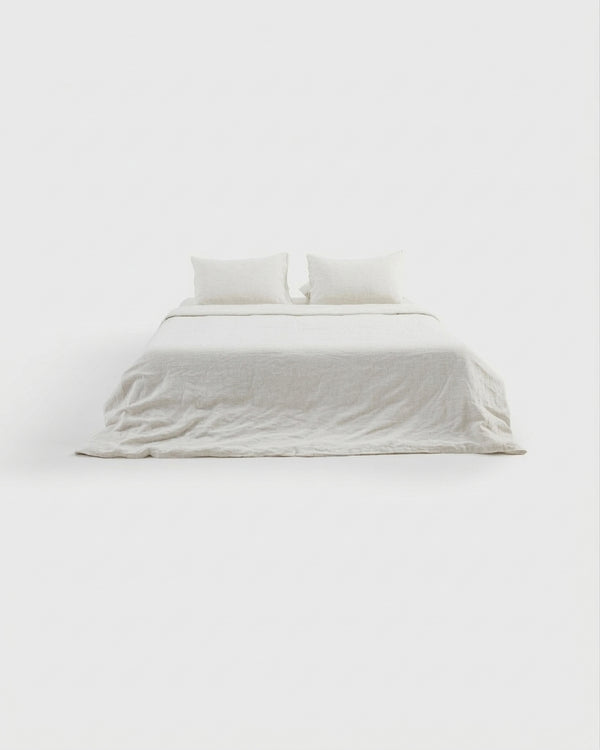
Our eucalyptus bedding is 100% Eucalyptus Tencel Lyocell, woven in a sateen with a silky finish, OEKO-TEX Standard 100 certified, and cut and sewn in our Bali atelier.
Why it sleeps cool
Three things are happening at once.
Moisture management. Lyocell fibres have a nanofibril structure that pulls moisture into the fibre itself rather than leaving it sitting on the surface. Cotton absorbs moisture too, but tends to hold it and stay damp. Lyocell moves it through and releases it. Practically, this is the difference between waking up clammy and waking up dry.
Smoothness. The fibre surface is genuinely smooth, which means less friction against skin and less of that hot, grabby feeling you get from a rougher weave when you are already warm. It also means the fabric drapes rather than traps — it falls against the body instead of tenting air pockets.
Thermal feel. Lyocell has a cool hand, the sensation of coolness when you first touch it. Some of this is the moisture behaviour, some of it is the fibre’s conductivity. Either way, getting into a eucalyptus bed in a Bali November feels noticeably different to getting into a cotton one.
The honest caveat: no fabric refrigerates you. Eucalyptus manages heat and moisture better than most, but it will not rescue a bedroom at 32°C with no airflow. Fabric is one variable among several.
Eucalyptus vs linen vs organic cotton
We make all three, which means we have no particular interest in declaring a winner. They suit different people and different rooms.
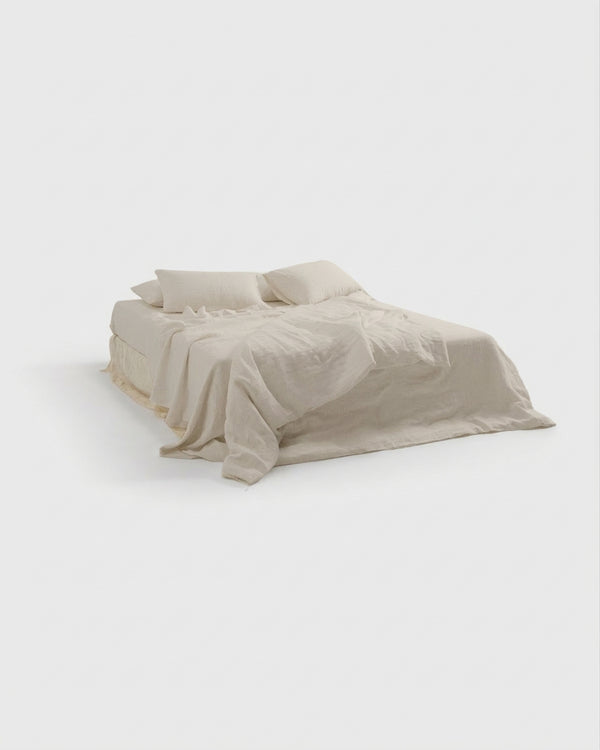
Eucalyptus Tencel is silky, fluid, and cool to the touch. It has drape rather than structure — it pools rather than stands up. Best for hot sleepers, anyone with sensitive or reactive skin, and people who want a bed that looks smooth and composed. It is the most “luxurious feeling” of the three in the conventional sense.
French flax linen is textured, breathable, and gets better with age. Our linen is 180 GSM, woven and stonewashed at the mill from flax grown in France, then cut and sewn in Bali. It is the most breathable of the three in genuinely humid heat because the weave is more open and the fibre is hollow. It looks relaxed — slightly rumpled is the point, not a flaw. Linen is the long game: it softens for years rather than degrading.
Organic cotton sateen is crisp and hotel-fresh. Egyptian long-staple, sateen weave, organic and OEKO-TEX Standard 100 certified. If your ideal bed is the one in a well-run hotel — smooth, cool, slightly formal — this is that. It is the most familiar of the three and the least likely to surprise anyone.
A shorthand that holds up reasonably well: choose eucalyptus if you sleep hot and want silky; choose linen if you live somewhere humid and want texture and longevity; choose cotton if you want crisp and classic.
If you cannot decide from a screen, order swatches. We make sample sets for all three fabrics for exactly this reason, and hand feel settles the question faster than any article will.
Who eucalyptus is especially good for
Hot sleepers and menopausal night sweats. This is the clearest case. The moisture-wicking behaviour is the whole point, and it is the group who notices the difference most immediately.
Sensitive skin and eczema. The smooth fibre surface means less mechanical irritation, and the moisture management means less of the damp warmth that dust mites and bacteria like. Our eucalyptus is OEKO-TEX Standard 100 certified, meaning it has been tested for harmful substances across more than 100 parameters. That certification is not a medical claim, but it does mean the finished fabric has been tested for harmful substances.
Anyone in a tropical climate. We are based in Bali, which is a fairly punishing test environment for bedding. Eucalyptus and linen are the two fabrics that survive it well.
Long hair sleepers. Minor, but real — the low friction of a sateen lyocell is kinder to hair overnight than a rougher weave.
How to care for eucalyptus Tencel
Lyocell is easy to live with, but it does have preferences.
Wash cold, gentle cycle, like colours. Heat is the main enemy. Cold water preserves both the finish and the colour.
Tumble dry low, or line dry in shade. Take it out slightly damp if you can. High heat is what dulls the silky finish over time.
Skip bleach and fabric softener. This is the one people get wrong. Fabric softener coats the fibre and destroys the exact moisture-wicking property you chose the sheets for. It makes them feel briefly nicer and permanently worse. Bleach weakens cellulosic fibres outright.
Do not overload the machine. Lyocell is weaker when wet than when dry. A crowded drum means more mechanical stress on wet fibre, which shows up as pilling months later.
Ironing is optional. Sateen lyocell comes out of the dryer fairly smooth. If you want it crisper, iron on low while slightly damp.
Follow that and eucalyptus sheets hold their finish for years. Ignore the fabric softener rule and they will feel flat within a season.
What eucalyptus is not
Worth saying plainly, because most guides skip it.
It is not the most durable of the three fabrics. Linen outlasts it comfortably. Lyocell is strong for a cellulosic fibre but it does not have the multi-decade lifespan that good flax does.
It is not warm. If you sleep cold, or you are buying for a genuinely cool climate, the cooling behaviour that makes it excellent in the tropics will work against you. Cotton or a linen-cotton waffle blanket layer would serve you better.
It is not a cure for a hot bedroom. Airflow, mattress construction, and what you sleep under matter as much as the sheet. A cooling sheet on a memory foam mattress that traps heat is fighting uphill.
And “eucalyptus” on a label is not automatically lyocell. Blends are common. Check that it says 100%, and check for OEKO-TEX certification rather than taking the marketing at face value.
Choosing your set
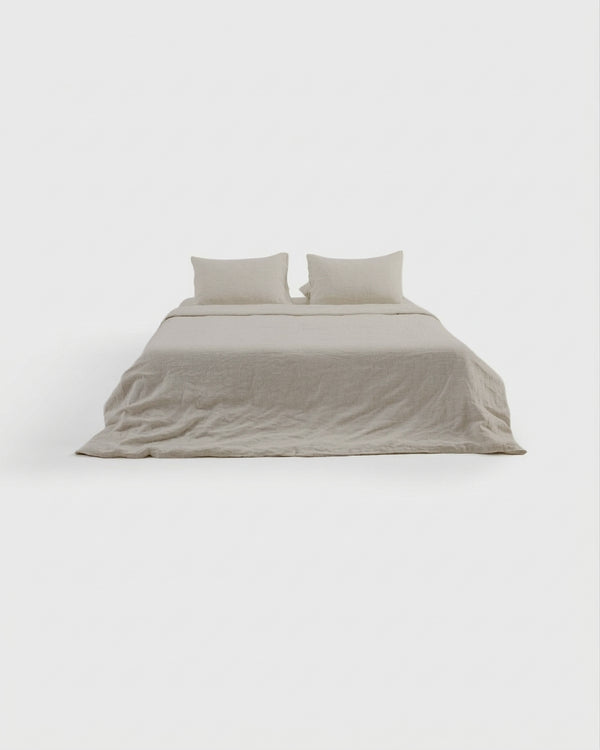
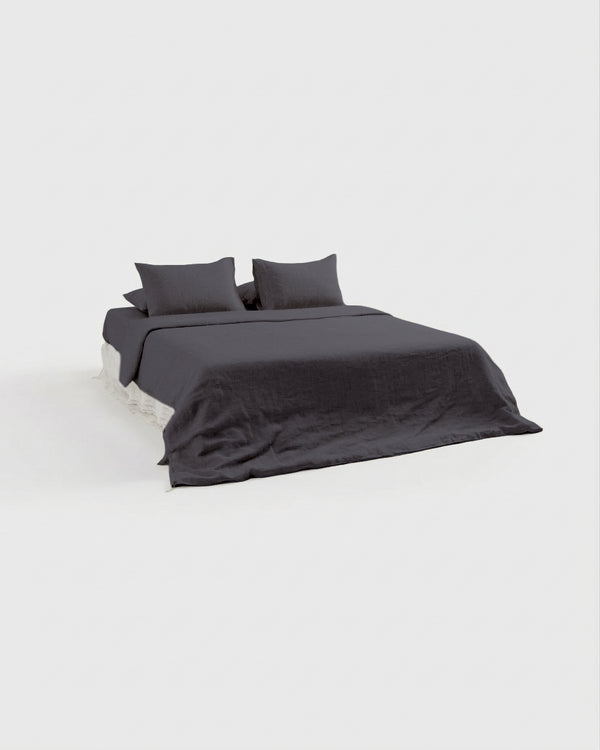
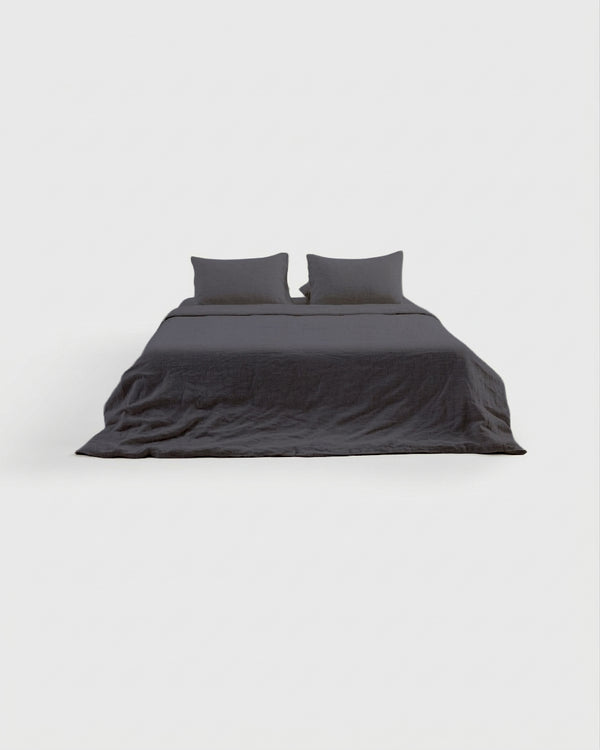
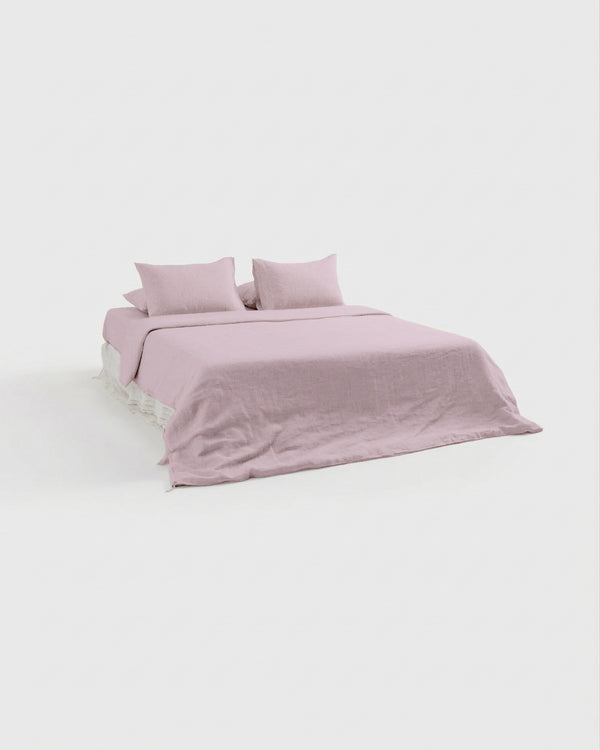
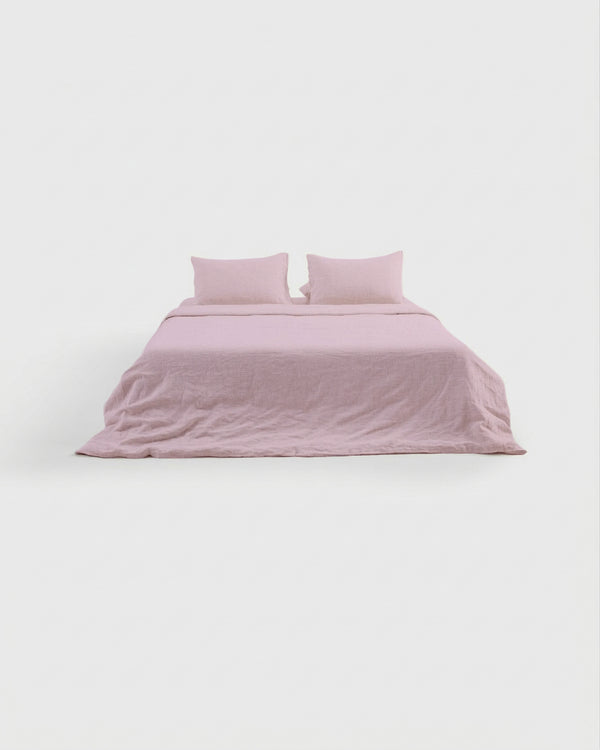
Our eucalyptus range comes in colours from White, Cream and Mint to Charcoal, Forest, Midnight and Blush, across fitted sheets, flat sheets, duvet covers, pillowcases and bolstercases.
If you are starting from scratch, the 4-piece sheet set (fitted sheet, flat sheet, two pillowcases) is the straightforward entry point, or the 4-piece bedding set (fitted sheet, duvet cover, two pillowcases) if you sleep under a duvet. The 7-piece bundle has everything, duvet cover, flat sheet, fitted sheet and four pillowcases, and is the better value if you are replacing everything at once. If you already have a duvet you like, the 3-piece fitted sheet set covers the parts that touch you.
Bolstercases are a specifically Indonesian addition — if you sleep with a bolster pillow, we make eucalyptus covers for it, which very few international brands do.
And if you are torn between eucalyptus and linen, there is a reasonable middle path: eucalyptus sheets against the skin, a linen-cotton waffle blanket on top. Cool where it counts, texture where you can see it.
The Katha cuts and sews French flax linen, eucalyptus Tencel and Egyptian long-staple organic cotton bedding in Bali. All of our bedding is OEKO-TEX Standard 100 certified. Order a swatch set if you would like to feel the difference first.