Linen Waffle Towels & Blankets: Why the Waffle Weave Works
If you have only ever dried off with a thick terry towel, the first time you use a waffle-weave linen towel is a slightly confusing experience. It looks thinner. It feels lighter. It seems, at a glance, like it shouldn't work.
Then you use it, and it works better.
The waffle weave is one of those quiet pieces of textile engineering that solves several problems at once — absorbency, drying time, weight, and longevity — without adding bulk. It's why waffle towels turn up in spas and boutique hotels, and why waffle blankets have become the layer people actually reach for in warm climates.
Here's how the weave works, why we pair flax linen with organic cotton, and how to choose between the pieces in the range.
What “waffle weave” actually means
Most towels are terry cloth: a base fabric with thousands of small loops of yarn standing up from the surface. Those loops hold water. More loops, more absorbency — and more weight, more drying time, and more fibre to eventually go stiff.
A waffle weave takes a different route. Instead of loops, the yarns are woven in a raised grid — a honeycomb of small square pockets. The pockets do two jobs at once:
They create surface area. The ridges and recesses give the fabric far more contact area than a flat weave, so it picks up water quickly despite using less yarn.
They create airflow. The open structure means air moves through the fabric instead of being trapped inside dense loops. Water evaporates from the whole depth of the cloth rather than just the outer face.
That second point is the one that matters most in a humid climate. A terry towel in a Bali bathroom can still be faintly damp the next morning. A waffle towel of the same size, hung properly, is usually dry within a few hours — because there is simply less material holding water and more air getting to it.
The same logic applies to blankets. A waffle blanket traps warmth in the air pockets of the grid rather than in a dense wall of fibre, so you get insulation that breathes. It's warm without being stifling, which is exactly what you want when the temperature drops at 3am but you don't want to wake up overheated.
Why linen and cotton together
Our waffle pieces are woven from 63% flax linen and 37% organic cotton at 250 GSM, pre-washed, and woven and finished in Lithuania — a region with a long history of linen weaving and the finishing expertise the fabric needs.
The blend is deliberate. Each fibre brings something the other lacks.
Linen brings the performance. Flax fibre is hollow and highly absorbent — it can take on a significant share of its own weight in moisture before it feels wet against the skin. It's also naturally breathable, dries fast, and gets stronger when wet, which is why linen has been used for towels and household cloth for centuries. It resists odour better than cotton, which matters for something that spends its life damp.
Cotton brings the hand feel. Pure linen towels can start out crisp to the point of scratchy. Cotton softens the surface immediately, giving that first-use comfort while the linen does the heavy lifting on absorbency and drying.
Pre-washing matters too. Un-washed linen shrinks and stiffens on its first laundering. Pre-washing the fabric before it's cut and sewn means what you receive is what you keep — the texture is already relaxed, and the dimensions are stable.
The result is a cloth that behaves like linen and feels like cotton, and that improves rather than degrades over the first dozen washes.
Waffle towels: what to choose
The towel range is built around how people actually use a bathroom, so the sizes do specific jobs.
Face towel (40x40cm). Small, quick-drying, and the right size for washing your face or removing makeup without committing a full hand towel. These are the pieces that get used most and washed most, so the fast drying time earns its keep.
Hand towel. The workhorse next to the basin. Because waffle dries so quickly, a single hand towel realistically serves a guest bathroom for a weekend without going musty — a genuine advantage over terry.
Bath towel. The standard after-shower size. Noticeably lighter than a terry equivalent, which people either love immediately or take a week to adjust to. It absorbs as well; it just doesn't feel heavy doing it.
Bath sheet. The oversized option, for anyone who wants to wrap rather than dry. Still lighter than a terry bath towel despite the larger footprint.
Towel sets. Two-piece sets in face, hand or bath, which is the simplest way to start if you're replacing a bathroom rather than adding to one.
A practical note on colour: the range runs from neutrals like Flax, White and Fawn through to Wood, Sienna and Sapphire. Bathrooms are small rooms with hard surfaces, and textiles are usually the only soft element — so towels carry more visual weight there than they do anywhere else in the house. Neutrals disappear and let tile or timber lead; deeper tones like Sapphire and Sienna become the feature.
Waffle blankets: the layer for warm climates
The waffle blanket is the piece people are most surprised by, because it solves a problem they had stopped trying to solve.
In a tropical or subtropical bedroom, most blankets are wrong. A duvet is too much for most of the year. A thin cotton throw looks right but does nothing once the air conditioning kicks in. The waffle blanket sits precisely in between: enough structure to feel like real bedding, enough airflow that you don't overheat.
It's oversized by design, so it drapes properly over a bed rather than sitting on top like a mat, and it works three ways:
- Folded at the foot of the bed, as the layer you pull up at 3am.
- As the whole covering through warmer months, over a flat sheet, instead of a duvet.
- Over a sofa or armchair, where the texture does a lot of work in a room of flat surfaces.
Because it's the same linen-cotton waffle as the towels, it shares their habits: it breathes, it dries fast if it gets damp, and it softens steadily with washing.
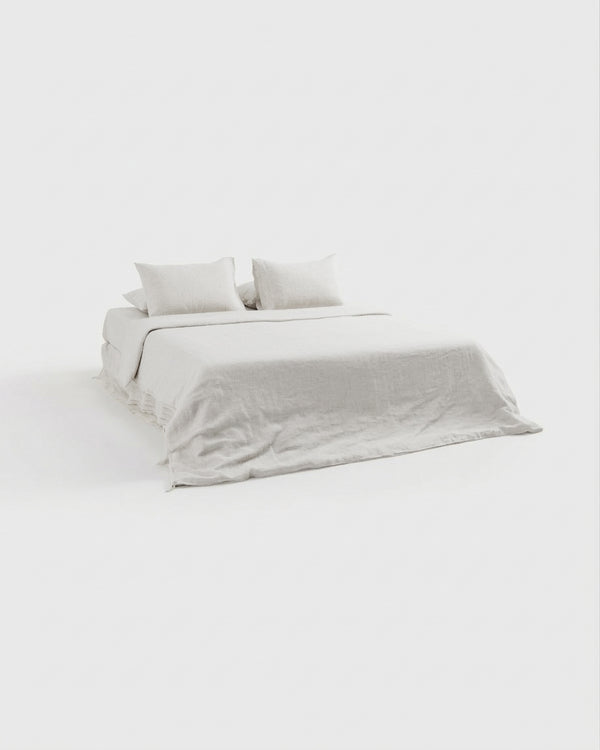
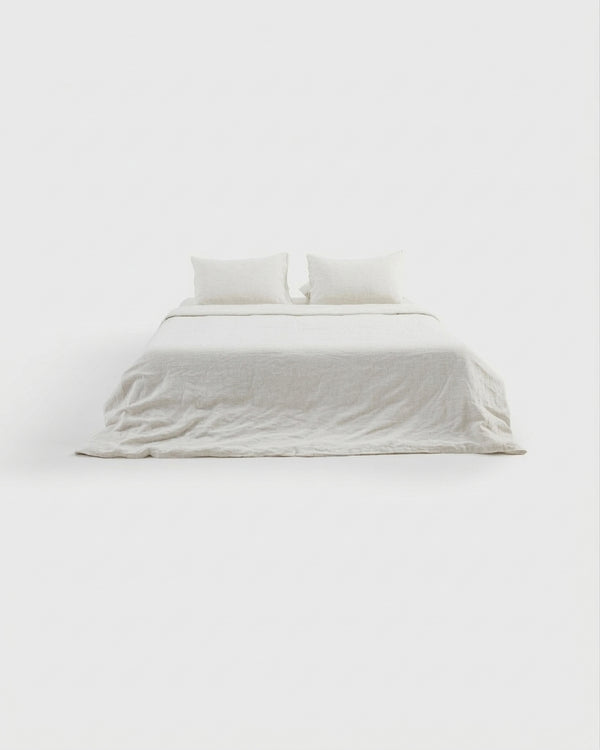
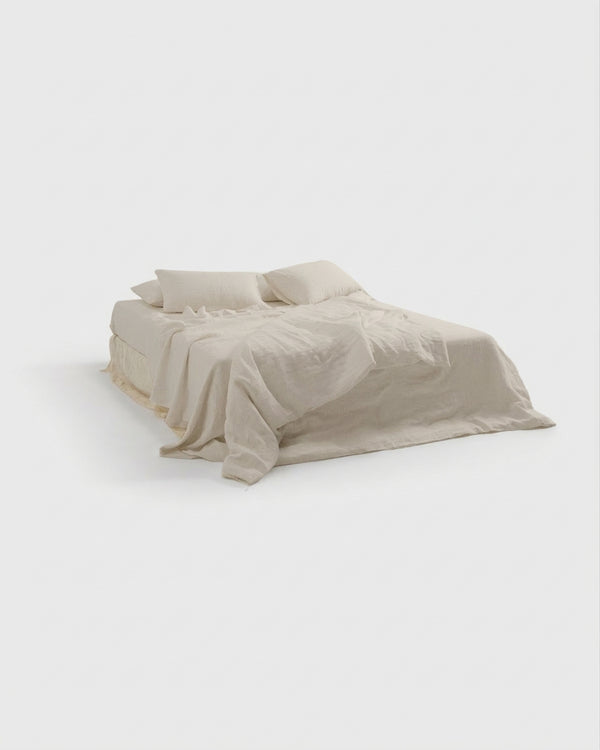
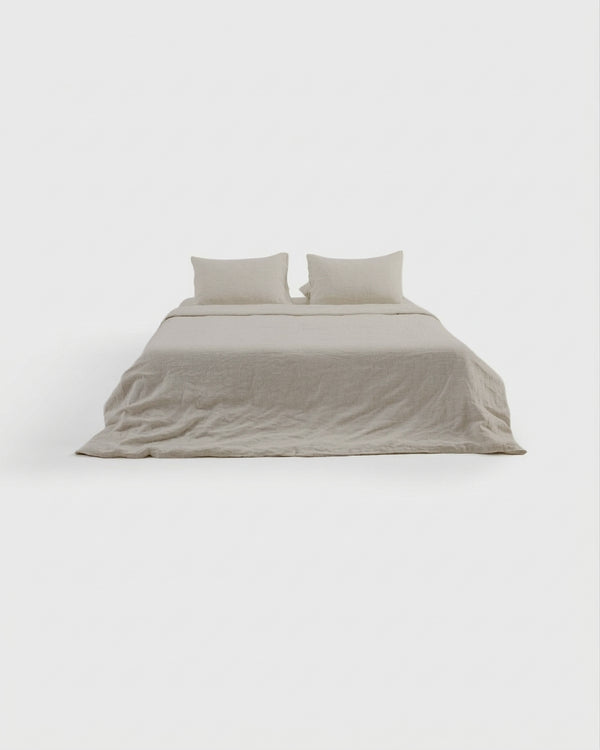
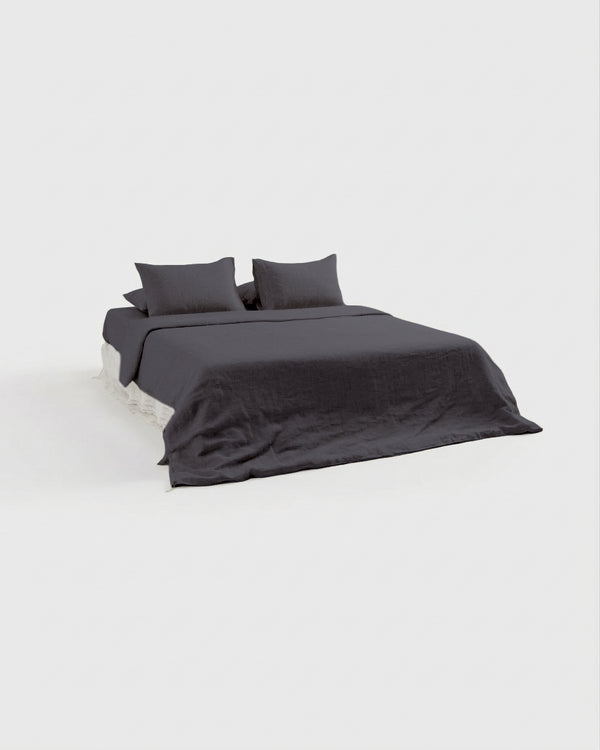
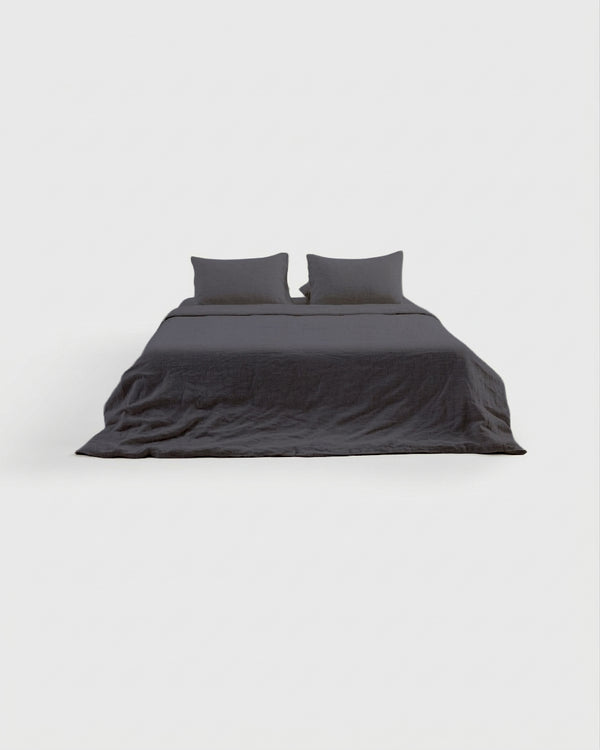
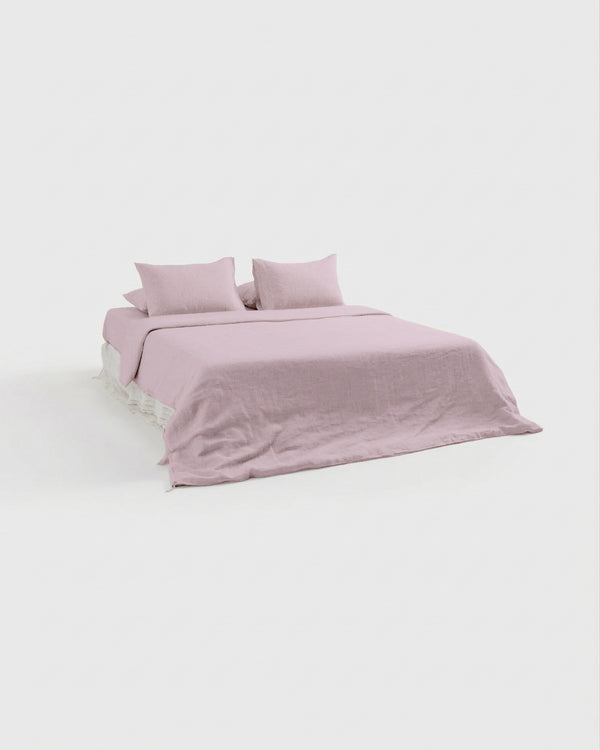
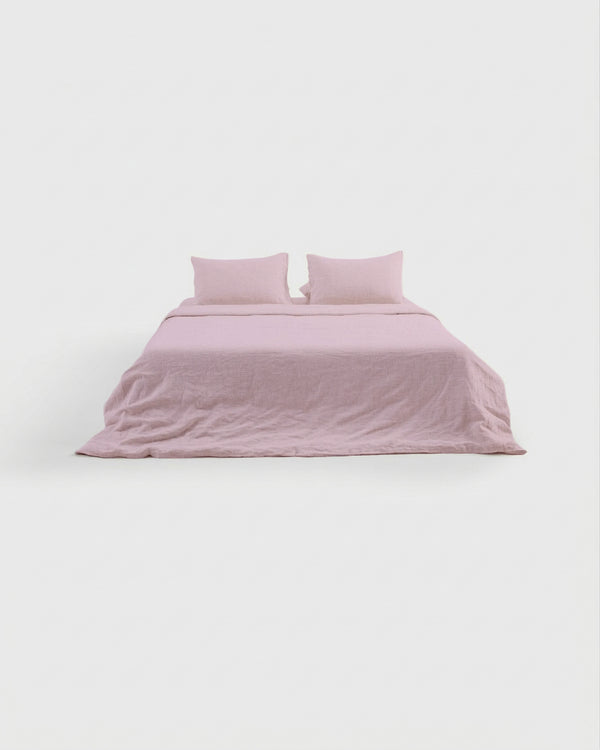
The blanket range runs across Flax, Fog, White, Ivory, Fawn, Taupe, Wood, Olive, Cedar Green, Sienna, Slate Blue and Sapphire — enough range to either match existing bedding or deliberately contrast it. A common approach is to keep the sheets neutral and let the blanket carry the colour, since it's the layer that's actually visible when the bed is made.
Caring for waffle linen
Waffle is low-maintenance, but a few habits extend its life considerably.
Wash warm or cold, on a gentle cycle, with like colours. Hot water is unnecessary and hard on the fibre.
Skip the fabric softener. This is the single most important rule for any absorbent textile. Softener works by coating fibres in a thin waxy film — which is precisely what stops them absorbing water. It makes towels feel plush and perform badly. Waffle linen softens on its own through washing and use; it doesn't need help.
Use less detergent than you think. Residue builds up in the waffle pockets over time and stiffens the cloth. If your towels ever start feeling waxy, run them through a hot wash with a cup of white vinegar and no detergent to strip the buildup, then resume normal washing.
Tumble dry low, or line dry. Low heat keeps the weave relaxed. Line drying in the sun is excellent for linen and helps keep whites bright, though prolonged direct sun will gradually fade deeper colours — dry those in shade.
Don't iron towels. Ironing crushes the waffle structure flat, which is the entire point of the weave. Blankets can be pressed on low if you want a smoother drape, but the texture is the point.
Give them air. Hang towels spread out rather than bunched on a hook. Waffle dries fast, but only if air can reach it.
Is waffle right for you?
Waffle is the better choice if you want towels that dry quickly, take up less space in a cupboard, feel light in humid weather, and get softer over years rather than going stiff. It's the better choice for a blanket if you want warmth that breathes.
Terry is still the better choice if what you want is the sensation of being enveloped in something thick and plush, and you have the drying conditions to support it.
Most people who switch don't switch back — not because waffle is objectively superior at everything, but because the drying time changes the daily experience more than they expected.
Explore the range: Waffle linen towels · Linen-cotton waffle blankets · All waffle pieces
All Katha waffle pieces are woven from 63% flax linen and 37% organic cotton (250 GSM), pre-washed, and woven and finished in Lithuania. Order a waffle swatch to feel it first.