Linen vs Eucalyptus Tencel vs Organic Cotton Sheets: Which Bedding Is Right for You?
Choosing new sheets used to be a question of thread count and colour. Today the more useful question is which fibre. The three best natural options for a beautiful, breathable bed — French flax linen, eucalyptus Tencel Lyocell, and organic cotton — each behave very differently once they're on your mattress. They feel different to the touch, they handle heat and humidity in their own ways, and they age along separate timelines.
At The Katha we cut and sew all three in our Bali atelier, so we spend a lot of time helping people work out which one suits their sleep. This guide breaks down how the fabrics compare on the things that actually matter — feel, temperature regulation, durability, care, sustainability and cost — so you can choose once and sleep well for years.
The quick answer
If you want the short version: choose linen for a relaxed, lived-in look and unbeatable year-round breathability, especially in hot and humid climates. Choose eucalyptus Tencel if you run hot at night or have sensitive skin and want a silky, cool-to-the-touch finish. Choose organic cotton if you love a crisp, hotel-fresh bed and a smooth sateen surface at a friendly price.
All three are excellent. The rest of this guide is about matching the fibre to your body, climate and taste.
What each fibre actually is
French flax linen is made from the stalk of the flax plant. The flax behind our linen is grown and milled in France — the historic heart of the world's best flax. The cloth is woven and stonewashed at the mill, then cut and sewn in our Bali atelier. Linen fibres are long, hollow and naturally strong, which is exactly why linen breathes so well and lasts so long. Our linen is a substantial 180 GSM and certified to OEKO-TEX Standard 100, meaning it has been tested for harmful substances.
Eucalyptus Tencel Lyocell is a plant-based fibre spun from the pulp of sustainably grown eucalyptus trees. The wood pulp is dissolved and regenerated into fine, smooth filaments in a closed-loop process that recycles almost all of its water and solvent. The result is a fabric with a silky, almost liquid drape and a naturally cool hand. Ours is woven in a sateen finish and is also OEKO-TEX Standard 100 certified.
Organic cotton is the familiar one, made better. Egyptian long-staple organic cotton is grown without synthetic pesticides and spun into smooth, even yarn. Ours is woven in a sateen for a soft, crisp, hotel-style surface, and it carries both organic and OEKO-TEX Standard 100 certification.
Feel and look
This is where personal preference rules, so it helps to know what you're signing up for.
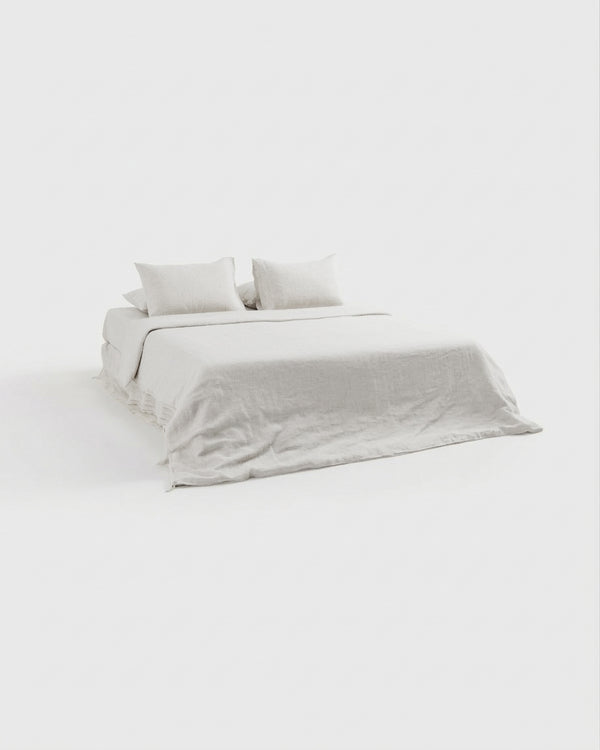
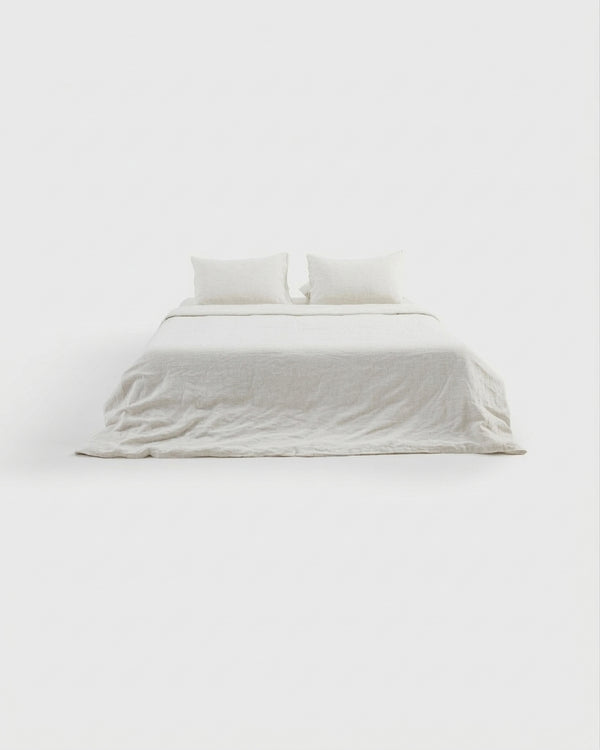
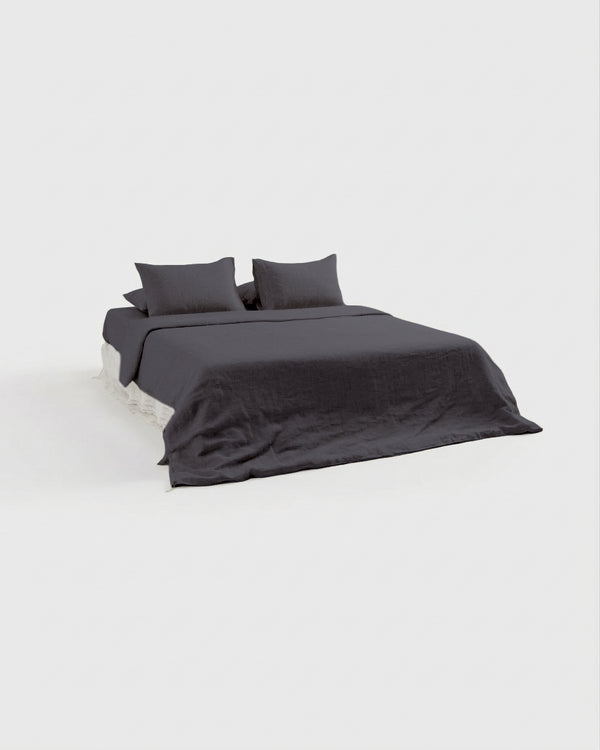
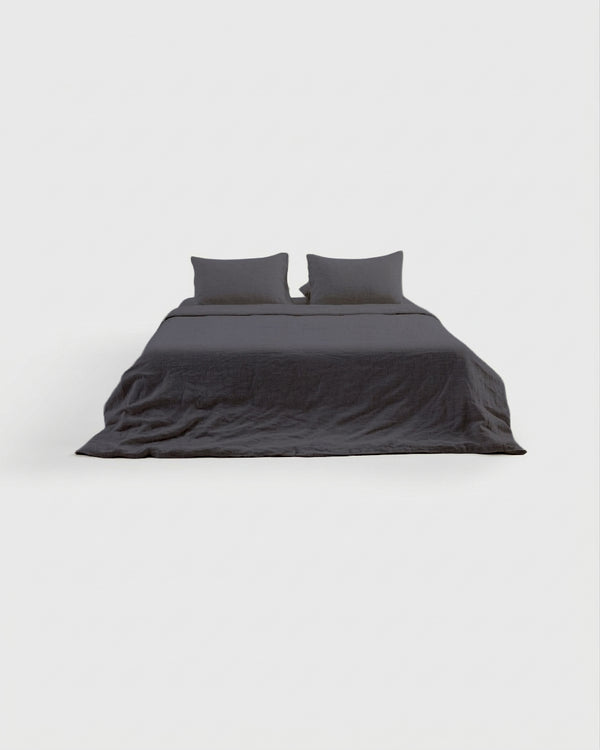
Linen has texture. Fresh from the wash it has a gentle, organic crinkle and a matte finish that looks effortlessly undone — the kind of bed that always looks good even when it isn't perfectly made. It starts with a little body and softens with every single wash, eventually reaching a broken-in, almost buttery hand after a few months of use. If you like a relaxed, European, slightly imperfect aesthetic, linen is made for you.
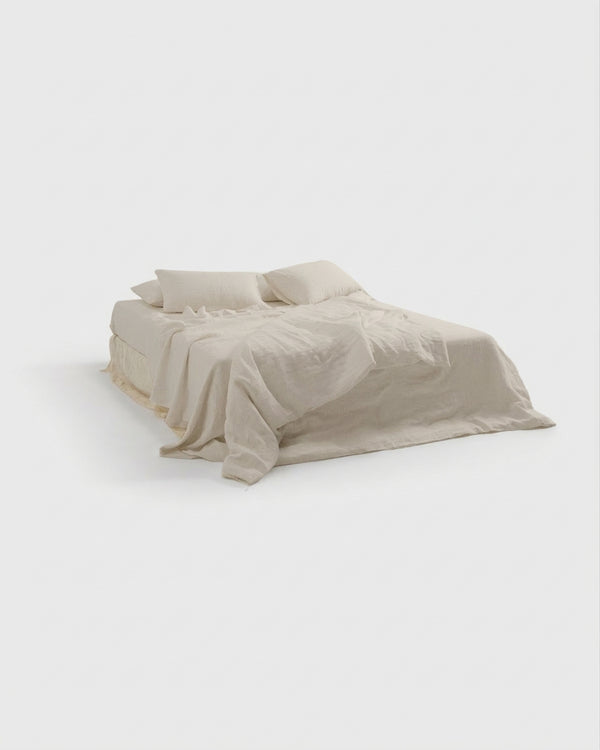
Eucalyptus Tencel is the silky one. It has a smooth, fluid drape that slips over the body and a subtle sheen that reads as quietly luxurious rather than shiny. There's no crinkle; it lies sleek and flat. People who love the sensation of cool, smooth sheets against the skin tend to fall hard for eucalyptus.
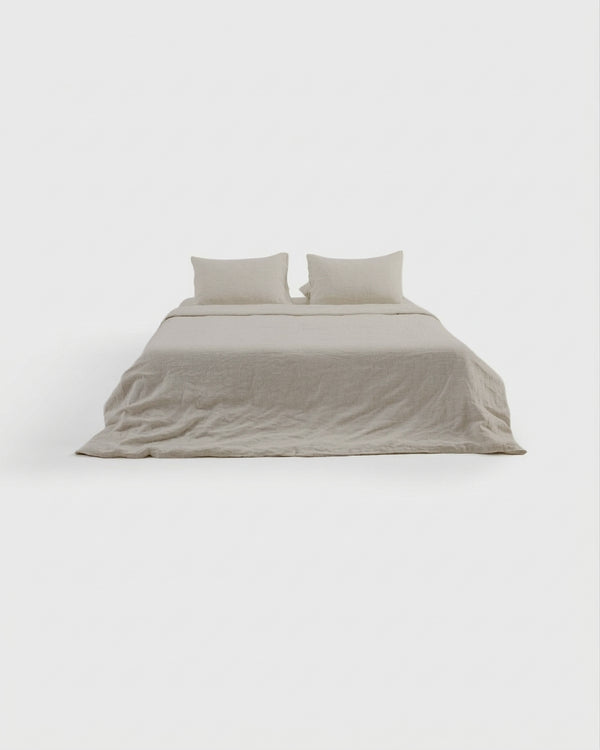
Organic cotton sateen sits in between: smoother and crisper than linen, with more structure than eucalyptus. It presses to a clean, hotel-fresh finish and has that reassuring, classic cotton feel most of us grew up with — just softer and more refined thanks to the long-staple fibre.
Temperature: the hot-sleeper question
If you overheat at night, fibre choice matters more than anything else in your bedroom.
Linen is the champion of breathability. Its hollow fibres and slightly open weave move air and wick moisture extremely well, and it actually feels cooler as humidity rises — which is why it's the traditional bedding of warm, sticky climates. It's genuinely a year-round fabric, because the same airflow that keeps you cool in summer traps a thin insulating layer when it's cooler. For hot and humid conditions, linen is hard to beat.
Eucalyptus Tencel wins on that first cool-to-the-touch sensation. The smooth, dense fibres conduct heat away from your skin quickly, so the sheets feel instantly cool when you slip in. It's also outstanding at absorbing moisture — Tencel can hold more moisture than cotton before it feels damp — which keeps night sweats from waking you. If your main complaint is waking up hot, eucalyptus is purpose-built for you.
Organic cotton sateen is breathable and comfortable but, of the three, retains a touch more warmth, especially in a tight sateen weave. It's a great all-rounder for temperate bedrooms and people who don't run especially hot. If you live somewhere genuinely tropical, linen or eucalyptus will serve you better.
A simple rule of thumb: humid heat → linen; sweaty, restless heat → eucalyptus; mild climate → any of the three.
Sensitive skin
Both eucalyptus Tencel and organic cotton are excellent for reactive skin, and all three of our fabrics are OEKO-TEX Standard 100 certified, so the finished fabric has been tested for harmful substances.
Eucalyptus has a particular edge here. Its filaments are exceptionally smooth, so there's very little friction against the skin, and its moisture management helps keep the sleep surface dry — a meaningful benefit for people prone to eczema or irritation. Organic cotton is a gentle, classic choice and a safe bet for children's rooms. Linen is naturally breathable and gentle too, though its texture is a little more pronounced; many people with sensitive skin love it, but if you want the smoothest possible surface, reach for eucalyptus.
Durability and how they age
Linen is the long-haul winner. Flax fibre is one of the strongest natural fibres there is, and good linen famously gets better with age, softening rather than wearing out. With proper care a quality linen set can last for many years and is often passed down. If you think of bedding as an investment, linen offers the best lifespan.
Organic cotton is durable and dependable; long-staple fibres resist pilling and hold up well to frequent washing. It won't have the decades-long lifespan of linen, but it ages gracefully and stays soft.
Eucalyptus Tencel is strong and resists pilling, but it rewards gentler handling than the other two. Treat it kindly in the wash and it stays silky and beautiful for a long time; it's simply a little less forgiving of rough treatment and high heat than rugged linen.
Care and maintenance
None of these fabrics is difficult, but they like slightly different routines.
Our linen is built for real life: machine wash cold on a gentle cycle with like colours, tumble dry low, and enjoy the fact that it gets softer with every wash. It's the most low-maintenance of the three precisely because its relaxed, crinkled look means you never need to iron it.
Eucalyptus Tencel prefers a cool, gentle wash and a low or line dry. Avoid bleach and very high heat to protect the silky finish. It needs little or no ironing thanks to its natural drape.
Organic cotton sateen is straightforward too — a cool gentle wash and low tumble dry. If you love that ultra-crisp hotel look, a quick press while slightly damp delivers it, but it's entirely optional.
Across all three, the same habits help: wash cold, skip the fabric softener (it coats fibres and reduces breathability), and don't over-dry.
Sustainability
This is a strong category for all three fibres, which is part of why we chose them.
Flax is a low-impact crop that needs little irrigation or pesticide and uses virtually the whole plant. Eucalyptus Tencel is produced in a closed-loop system that recovers the vast majority of its water and solvent, and the trees grow on land not suited to food crops. Organic cotton avoids synthetic pesticides and fertilisers and uses farming methods that are gentler on soil and water than conventional cotton. Our OEKO-TEX Standard 100 certification across all three fabrics adds independent testing for harmful substances on top of the fibre-level credentials.
Cost
Price generally tracks the fibre and the work involved. Organic cotton sateen is typically the most accessible entry point into premium natural bedding. Eucalyptus Tencel sits in the middle, reflecting its more involved manufacturing. French flax linen usually carries the highest upfront price — but spread across its long lifespan, it's often the best value per year of use.
So which should you choose?
- You live somewhere hot and humid, love a relaxed look, and want bedding that lasts: French flax linen.
- You're a hot sleeper or have sensitive skin and crave a cool, silky surface: eucalyptus Tencel Lyocell.
- You love a crisp, smooth, hotel-fresh bed at a friendly price: organic cotton sateen.
- You can't decide: mix them. Many of our customers sleep on eucalyptus or cotton sheets in peak summer and switch to linen the rest of the year — or layer a linen duvet cover over cotton sheets for the best of both.
Whatever you choose, the fundamentals are the same across our range: natural fibres, OEKO-TEX Standard 100 certification, and bedding made to be lived in. Explore our linen bedding, eucalyptus bedding and organic cotton bedding to find your colour — and if you're still unsure, our fabric swatch sets let you feel all three before you decide. Sleeping somewhere sticky? Read our guide to linen sheets for hot, humid weather.